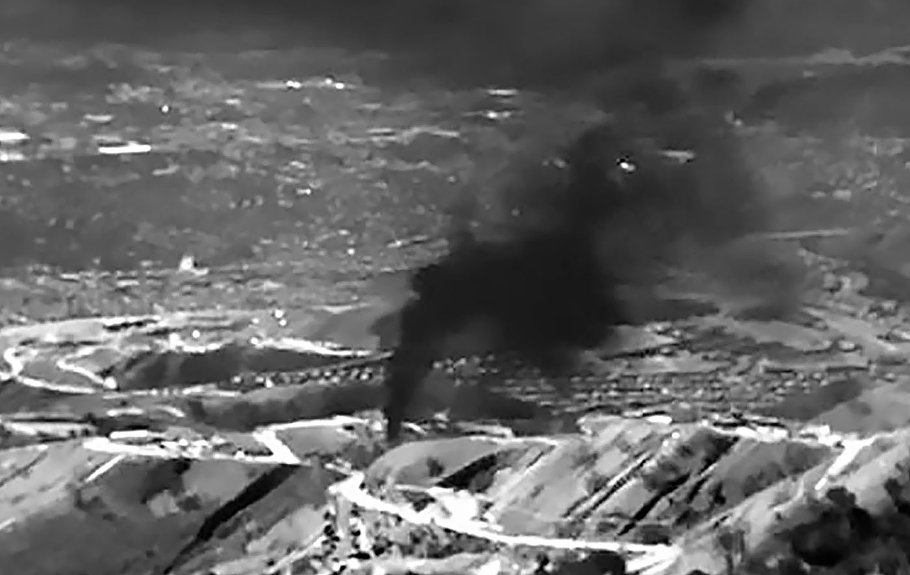

Los Angeles City Council John Lee and U.S. Rep. Brad Sherman, D-Sherman Oaks, released statements after a release of natural gas into the air was reported at the Aliso Canyon Natural Gas Storage Facility on Tuesday. Lee said he was closely monitoring the situation but said there didn’t appear to be any risk, but Sherman declared that the incident “shows that is it long time past time to shut it down.”
Aliso Canyon was the site of the largest natural gas blowout in history, Oct. 23, 2015, which lasted nearly four months. Some 109,000 metric tons of methane escaped into the air before SoCalGas fixed the leak on one of its wells. Many residents reported health issues and myriad lawsuits resulted. Activists and some public leaders have fought to close the facility.
Since 2015, however, the utility company has reported implementing enhanced safety measures. The state utility board has voted to keep the facility in operation for energy reliability reasons and to keep energy costs down for consumers but also adopted a framework for when it would start to consider shutting down the facility.
“I have been fighting to close this natural gas storage facility down. Southern California Gas Company has refused to even try to develop a natural gas delivery system that is not dependent upon Aliso Canyon,” Sherman said.
Chris Gilbride, spokesperson for SoCal Gas, said “a safety valve on an aboveground pipeline at the Aliso Canyon natural gas facility activated, temporarily venting natural gas to the atmosphere.” He added, “The release of natural gas lasted under 20 minutes and was safely stopped by operators at the field.”
Lee published a statement on Instagram saying his office has been “closely monitoring” the incident. Lee said the release of natural gas “was safely stopped by operators at the facility.”
Lee added, “Preliminary reports indicate the safety valve functioned as designed. Operators are inspecting the impacted pipeline and making any needed repairs. No additional venting is anticipated. The incident did not impact other operations at Aliso Canyon. We will share updates as more information becomes available and necessary.”
Food & Water Watch, a nonprofit advocacy organization, released several comments by groups who have long demanded SoCalGas to shut down the facility. The organization said that community members “reported hearing a loud noise and strong smell of gas coming from the Aliso Canyon gas storage facility — the site of the largest gas blowout in U.S. history just over a decade ago.”
Food & Water Watch released comments by Patty Glueck, co-founder of Aliso Moms Alliance, who said, “SoCalGas continues to demonstrate that it can’t operate a safe facility. From the December 27th pipeline rupture in Castaic to today’s infrastructure problem that caused methane, mercaptans, and a hazardous toxic soup of carcinogens and other chemicals into our environment, those who live near this facility have good reason to want it closed down.
“Not only is it a fire and safety risk,” she said, “the current UCLA health study being conducted is proving it has harmed countless numbers of residents. In addition, the gas company doesn’t notify the community when it has caused a problem.”
Matt Pakucko, president and co-founder of Save Porter Ranch, said, “A decade ago, we warned our leaders. They documented the warning, but they ignored it. The system degraded exactly as predicted. Then the site detonated. People died exactly as expected. Officials said that ‘no one could have known,’ but the records say otherwise. That is exactly where we are with SoCalGas’s Aliso Canyon storage disaster: waiting. Today was the warning.”
Andrea Vega, Los Angeles Organizing Manager of Food & Water Watch, said, “This facility must be shut down once and for all.”
Over the past decade, in response to the blowout, state regulators set different limits on how much natural gas could be stored at Aliso Canyon.
A decade after the blowout, some residents still report health problems. But representatives for SoCalGas, meanwhile, have said independent regulatory agencies, including the California Office of Environmental Health Hazard Assessment, California Air Resources Board and the South Coast Air Quality Management District, previously reviewed data and “concluded that the Aliso Canyon gas leak did not pose longterm health risks to the public.”

